Artemis II live updates: NASA astronauts are officially further from Earth than humans have ever been
Astronauts on the Artemis II mission made history Monday by breaking the record set by Apollo 13 in 1970 for the distance traveled by humans from Earth.
The mission, which also marks NASA astronauts’ first close encounter with the Moon in more than 50 years, will see four astronauts travel a planned distance of 252,760 miles from Earth.
Artemis II Commander Reid Wiseman, Pilot Victor Glover, and Mission Specialists Christina Koch and Jeremy Hansen officially began the lunar flyby phase of their mission around 2:45 p.m. Eastern Time.
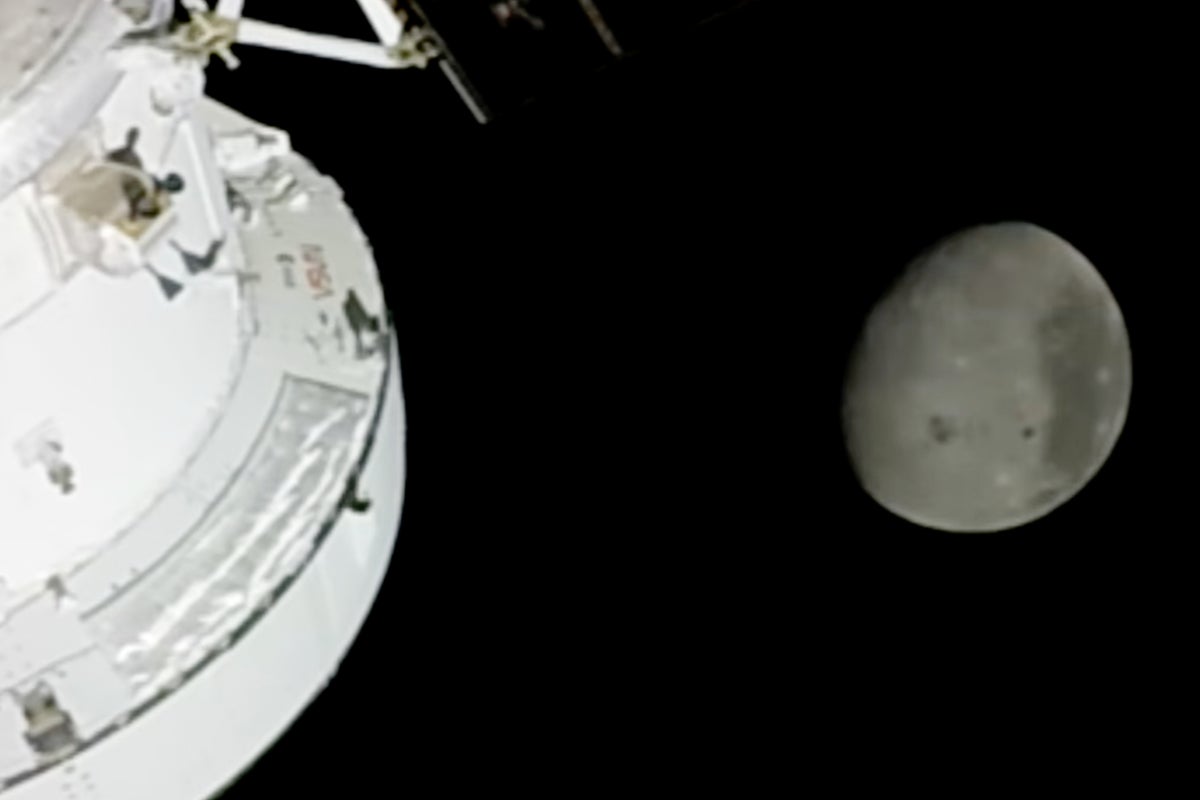
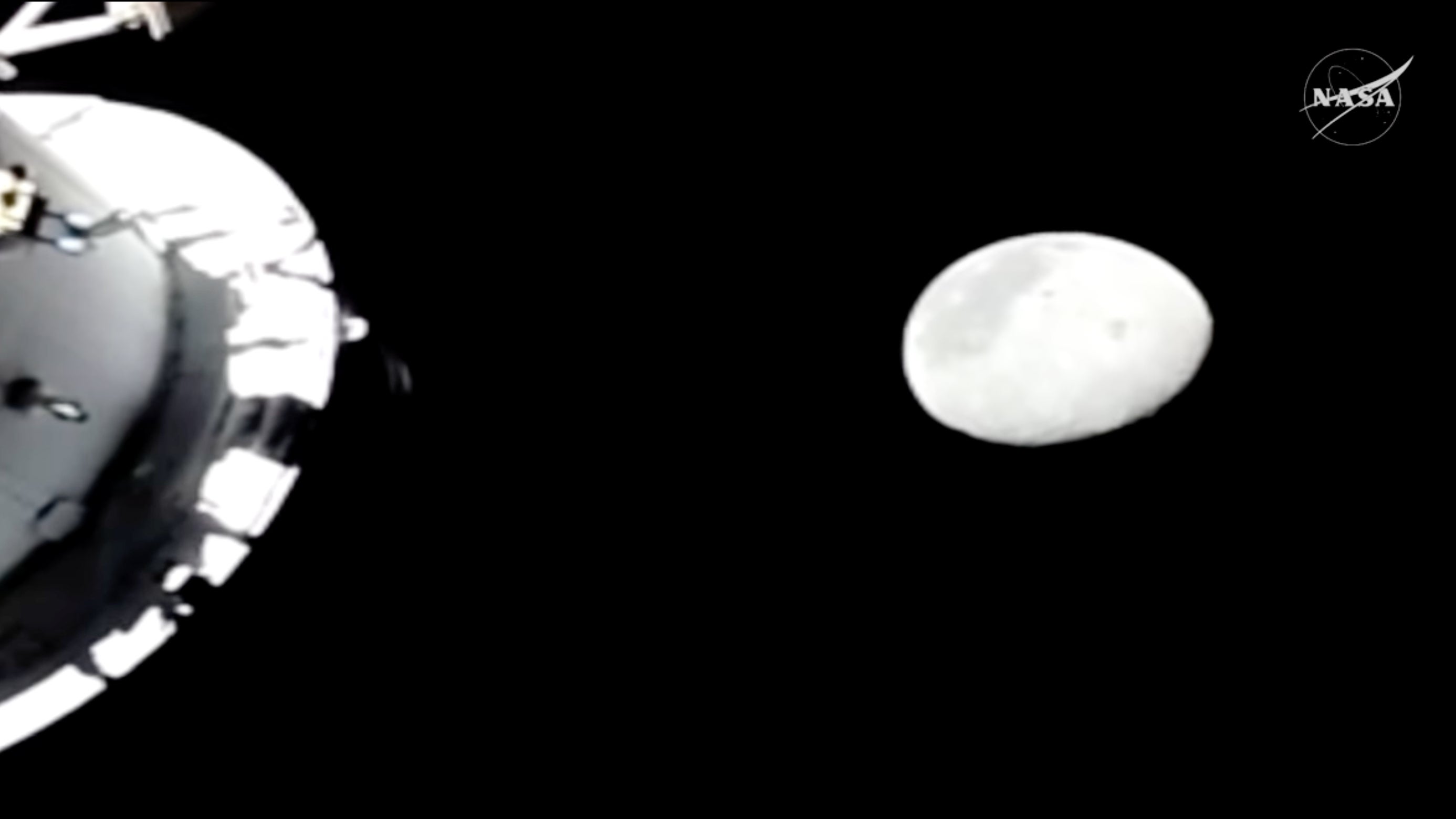
During the flyby, astronauts will observe previously unseen parts of the Moon’s surface.
They will reach their maximum distance from Earth at 7:07 p.m., then pass behind the far side of the Moon, observing parts of the Moon that have never before been observed by the human eye.
At that point, they will lose all radio contact with Earth for approximately 41 minutes.
It will take four days for the astronauts to return, with a splashdown in the Pacific expected to conclude their test flight on Friday.
NASA, which is broadcasting ongoing live coverage of the Artemis II mission, will continue its coverage Monday to show viewers the lunar flyby.
Astronauts name craters on the Moon after Reid Wiseman’s late wife Orion spacecraft
The astronauts of the Artemis II mission proposed naming two craters on the Moon to commemorate their historic journey.
One of the craters would be called Integrity, which is what the crew named the Orion spacecraft. The second crater will be named after Reid Wiseman’s late wife, Carroll.
Isabelle KeaneApril 6, 2026 8:09 p.m.
Lunar flyby officially begins
Artemis II astronauts begin conducting scientific observations as they begin their lunar flyby.
The crew, divided into pairs, will spend about seven hours collecting observations and taking photos of the Moon.
The observations will be made through the windows of the Orion spacecraft, with each pair looking for between 55 and 85 minutes before changing places.
Isabelle KeaneApril 6, 2026 7:50 p.m.
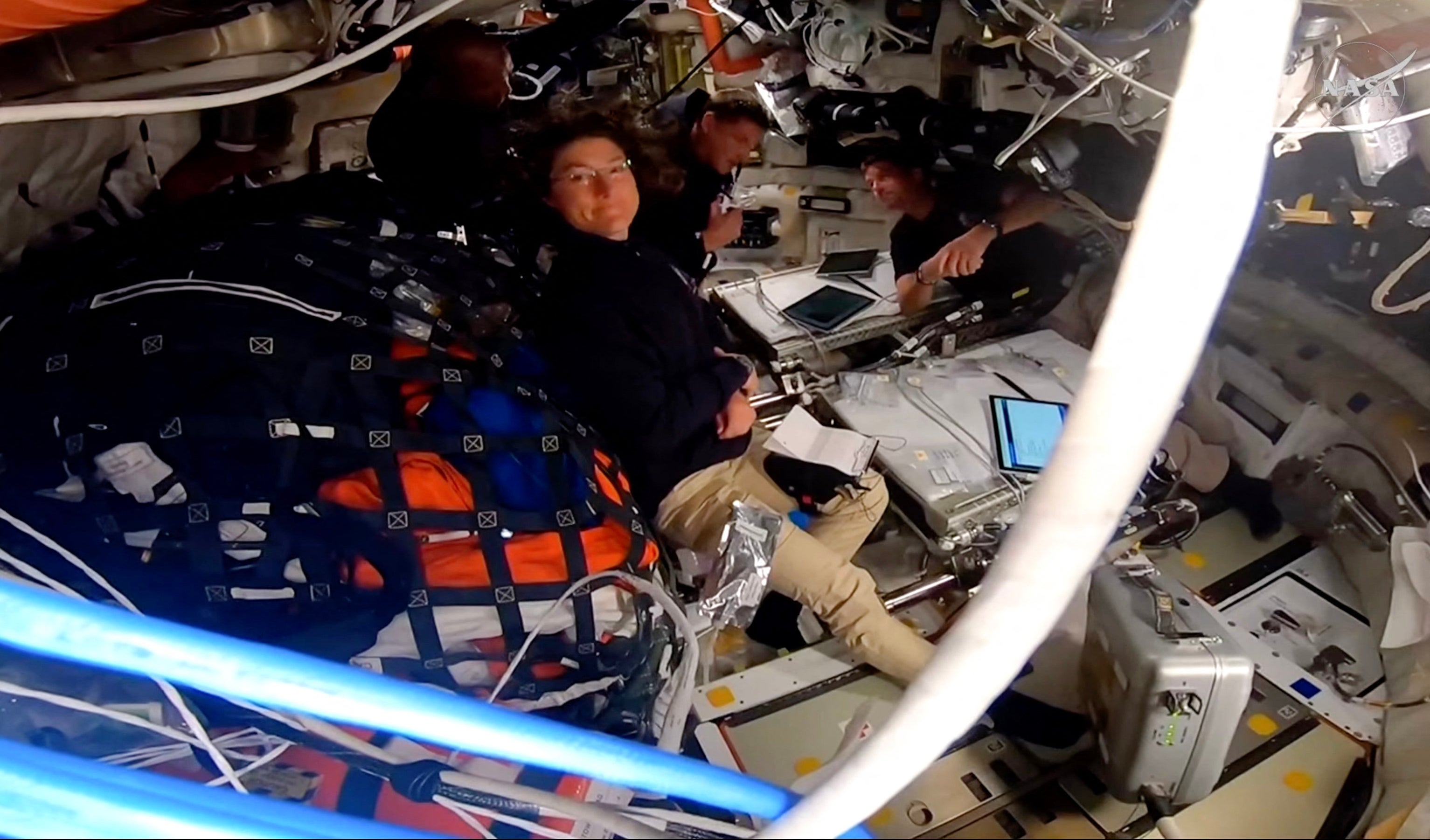
Livestream shows Artemis II crew aboard Orion plane
Isabelle KeaneApril 6, 2026 7:25 p.m.
NASA shares an image of the near side of the Moon
Isabelle KeaneApril 6, 2026 7:16 p.m.
Astronauts receive message that they have broken the record set by Apollo 13
After Artemis II broke the record, astronaut Jenni Gibbons, head of mission control in Houston, told the crew:
“On April 15, 1970, during the Apollo 13 mission, three explorers set the record for the farthest distance humans have ever traveled from our home planet. At that time, more than 55 years ago, Lovell, Swigert and Hayes flew 248,655 statute miles from Earth…
Today, for all of humanity, you are pushing back this boundary.
Isabelle KeaneApril 6, 2026 7:09 p.m.
Artemis II astronauts make history as farthest humans from Earth
The Artemis II astronauts made history Monday afternoon, becoming the furthest humans from Earth.
The Orion spacecraft’s four-person crew broke the Apollo 13 distance record of 248,655 miles from Earth, a record set in 1970.
The spacecraft broke the record shortly before 2 p.m. Eastern Time on Monday.
The spacecraft will reach its maximum distance from Earth of 252,760 miles from Earth at 7:07 p.m.
Isabelle KeaneApril 6, 2026 6:58 p.m.
Lead Lunar Observation Scientist Helps Crew Prepare for Observations
Kelsey Young, lead scientist for lunar observations on the Artemis II mission, helped the crew prepare for the observations they will make during the seven-hour flyby.
Young also reminded the crew that they should let their eyes adjust to the lighting. As part of the preparations, the lighting inside the Orion spacecraft was dimmed to allow the astronauts’ pupils to open wider so they could capture more detail during their observations.
Isabelle KeaneApril 6, 2026 6:49 p.m.
Artemis II crew set to break record for farthest astronauts ever to leave Earth
The crew of four astronauts will break the record for the greatest distance traveled by humans from Earth.
NASA expects the crew to break this record at 1:56 p.m. Eastern Time.
The crew will break the distance record from Earth set by Apollo 13 in 1970.
Isabelle KeaneApril 6, 2026 6:29 p.m.
Toilets were a recurring problem during the Artemis II lunar mission
The first problem last Thursday was with the toilet pump, which needed extra water to be ready for use. A second problem occurred Saturday with the wastewater discharge, whose ice blocked the delivery of liquid into space. Fortunately, the problems with the first-ever toilet to travel into deep space have been resolved so far.
The Artemis II flight, launched last Wednesday from Houston, Texas, is the first time humans have returned to the Moon in 53 years. The long-term goal is to establish a permanent base on the Moon that will allow astronauts to travel to Mars in the future.
Isabelle KeaneApril 6, 2026 6:26 p.m.
President Donald Trump congratulates astronauts and NASA administrator before flyby
President Donald Trump congratulated the four astronauts participating in the Artemis II mission, along with NASA Administrator Jared Isaacman, during the White House Easter Egg Roll on Monday.
“I think they’re fantastic,” Trump said of the Artemis II crew. “[Jared Isaacman’s] blew up NASA.
Isabelle KeaneApril 6, 2026 6:13 p.m.
PakarPBN
A Private Blog Network (PBN) is a collection of websites that are controlled by a single individual or organization and used primarily to build backlinks to a “money site” in order to influence its ranking in search engines such as Google. The core idea behind a PBN is based on the importance of backlinks in Google’s ranking algorithm. Since Google views backlinks as signals of authority and trust, some website owners attempt to artificially create these signals through a controlled network of sites.
In a typical PBN setup, the owner acquires expired or aged domains that already have existing authority, backlinks, and history. These domains are rebuilt with new content and hosted separately, often using different IP addresses, hosting providers, themes, and ownership details to make them appear unrelated. Within the content published on these sites, links are strategically placed that point to the main website the owner wants to rank higher. By doing this, the owner attempts to pass link equity (also known as “link juice”) from the PBN sites to the target website.
The purpose of a PBN is to give the impression that the target website is naturally earning links from multiple independent sources. If done effectively, this can temporarily improve keyword rankings, increase organic visibility, and drive more traffic from search results.